Free 1031 Exchange Calculator
Calculate capital gains tax deferral, boot exposure, replacement property requirements, and whether a 1031 makes sense for your deal — AI-powered, free forever.
Tell Freddie about your exchange:
What you get — free
Tax Deferral Estimate
See how much capital gains and depreciation recapture tax you could defer with a 1031.
Boot Calculator
Understand exactly how much boot you'd receive and what tax liability it triggers.
Replacement Property Math
Calculate the minimum replacement property value to fully defer all taxes.
Exchange vs Pay Tax
Side-by-side comparison of 1031 deferral vs paying the tax now — which is actually better?
Deadline Tracker
45-day ID and 180-day close deadlines explained in plain English for your specific timeline.
Free Forever
Core 1031 analysis free. Always. Note: not tax advice — consult a qualified intermediary.
Why this Northern Virginia deal was a wholetail — not a 1031
A 1031 exchange requires the relinquished property to be held as an investment — not purchased for resale. This hoarder house acquisition was always a short-term flip. We bought it, cleaned it out, and sold it on the MLS 30 days later for $115,050 profit. That's a wholetail, not a rental-to-exchange. The 1031 strategy applies when you've held a rental for years and want to roll the gains into a bigger property. For a 30-day wholetail, the right tax strategy is simply having a good CPA — not a qualified intermediary. Freddie scored the deal 100/100 regardless.
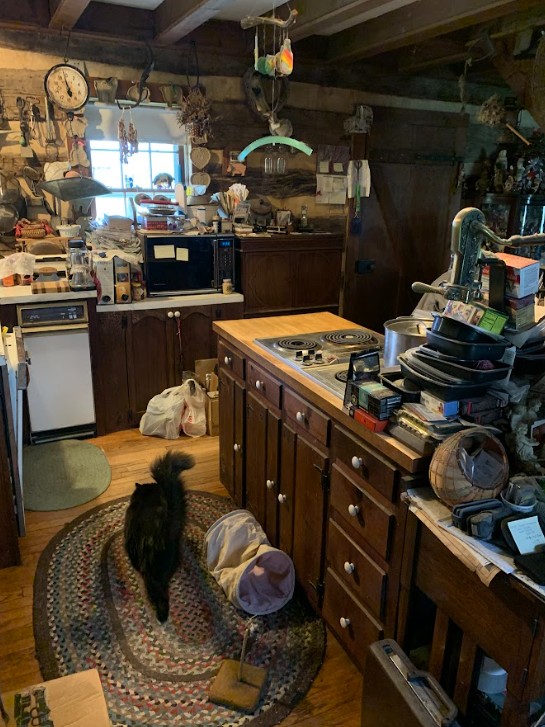

We sold the property as-is for $349K. The renovation pictured was completed by the buyer who purchased it from us. The $115,050 profit reflects our wholetail exit, not the renovation work.
Freddie scored the deal 100/100. Know which tax strategy applies to your deal type — 1031 is for long-term holds, not fast flips.
"1031 exchange lesson: the exchange only works if the property qualifies. Know the rules before you structure the deal — not after you're already under contract on a replacement."
1031 Exchange FAQ
What is a 1031 exchange?
A 1031 exchange (like-kind exchange) allows real estate investors to defer capital gains taxes by reinvesting the proceeds from a sold property into a new like-kind property. Named after IRS Section 1031, it's one of the most powerful tax strategies in real estate investing.
How do I calculate capital gains on a 1031 exchange?
Capital gains = sale price minus adjusted basis (purchase price + improvements - depreciation). If you don't exchange, you pay federal capital gains tax (0%, 15%, or 20%) plus depreciation recapture at 25%. A 1031 defers both.
What are the 1031 exchange deadlines?
You have 45 days from closing the relinquished property to identify up to 3 replacement properties. You must close on the replacement property within 180 days. Both deadlines are hard — missing either disqualifies the exchange.
What is boot in a 1031 exchange?
Boot is any cash or non-like-kind property received in the exchange. Receiving boot triggers partial taxation on the amount received. To defer all taxes, your replacement property must be of equal or greater value and you must reinvest all proceeds.
Does a 1031 exchange work for fix and flip?
Generally no. The IRS requires the relinquished property to be held for investment or business use — not for resale. Flips are treated as inventory, not investment property. 1031 exchanges are designed for rental properties and long-term holds.
Should I do a 1031 exchange or just pay the tax?
It depends on your situation. If you have a large gain (especially with significant depreciation recapture) and want to continue investing, a 1031 makes sense. If you're exiting real estate entirely or the exchange costs exceed the tax savings, paying the tax may be better. Always consult a tax advisor.
Analyze your 1031 exchange now
Free. No credit card. Not tax advice — consult a qualified intermediary for your specific situation.